

How Long Does It Take a Child to Learn to Swim?
The question “How long does it take a child to learn to swim?”is one we hear all the time – and it’s a great question. Parents naturally want to know what to expect before enrolling their child in swim lessons. But just like learning to dance or play golf, there isn’t a single timeline for learning to swim because success looks different for every family.
Are you hoping your child simply learns to float on their back? Is your priority building the skills and confidence to navigate the water safely? Or is your goal for them to develop the technique and endurance needed to swim across a 25-yard pool or pass a swim test?
Even those specific goals are shaped by a number of factors, including a child’s developmental readiness, comfort in the water, previous experience, and overall coordination and athleticism.
At Nashville Swim Academy, we focus on what your child can do confidently and consistently as they progress in their learning. We believe lasting swim skills are built one step at a time, with each lesson laying the foundation for the next.
What Does “Learning to Swim” Really Mean?
For some families, learning to swim means a child can paddle from one side of the pool to the other. For others, it could mean floating independently, treading water, or feeling comfortable putting their face in the water. All of these are meaningful milestones, but they represent different stages of a much larger journey.
We view swimming as a progression of skills. A child who can swim confidently in a controlled environment is demonstrating an important achievement, but true safety and skilled swimming also mean having the capacity to navigate an unfamiliar environment. This requires appropriate, in-the-moment decision-making in and around the water and remaining calm when circumstances change.
Our year-round program follows a structured path that allows children to build these skills. This begins with feeling comfortable with how their bodies move and respond in the water as they develop foundational abilities such as floating, breath control, propulsion, and calm, comfortable submersion. These are the core skills introduced during our FUNdamentals level.
Then kids move into the SAFEty tier, where they strengthen their independent floating, gliding, and propulsion abilities while becoming safety-aware and practiced in proper decision-making. As they move forward into the TECHnique tier, the focus is on refining stroke mechanics, endurance, and efficiency. Each stage prepares kids for the next, creating capable swimmers whose skills continue to grow right along with their confidence.
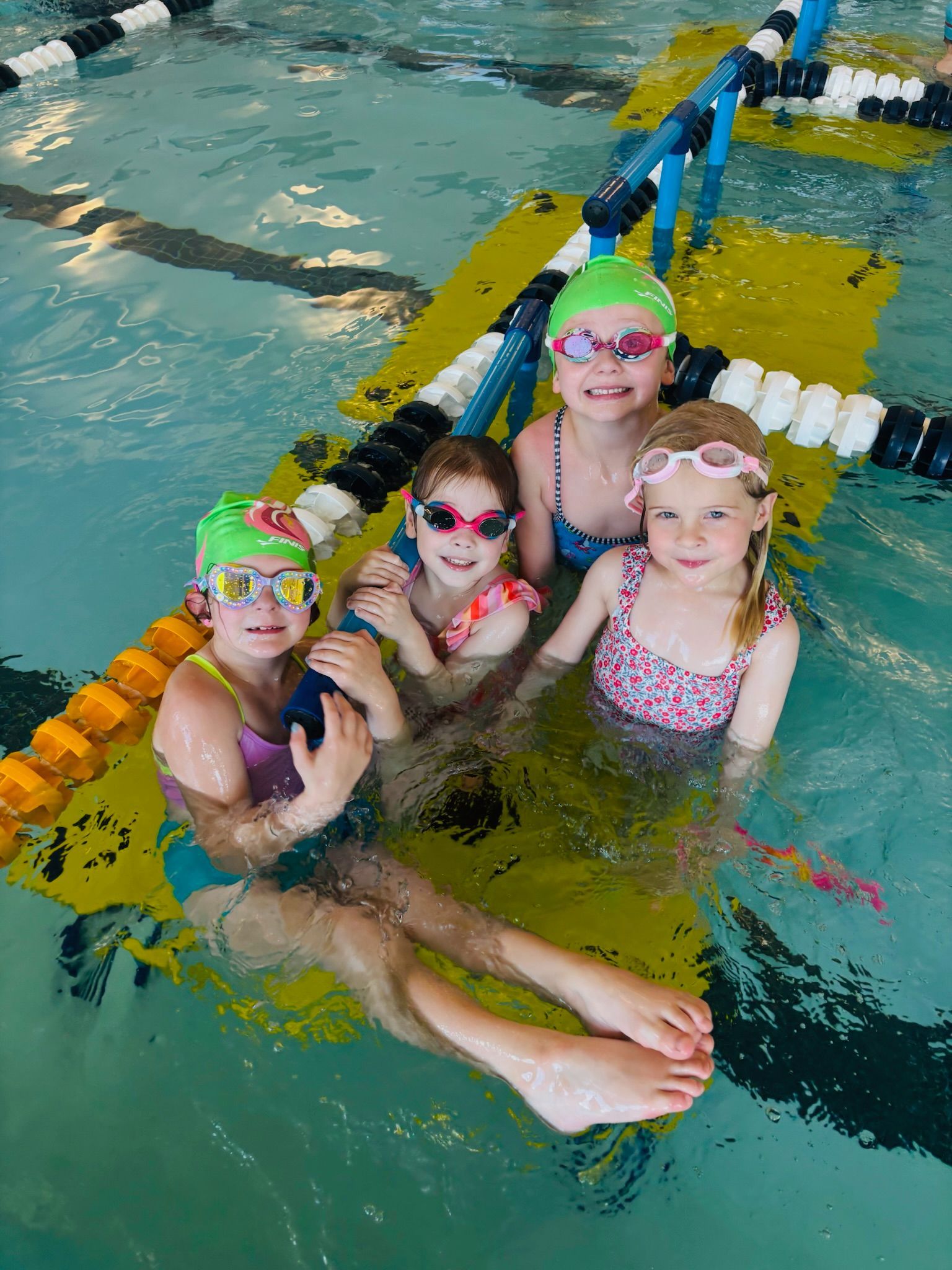
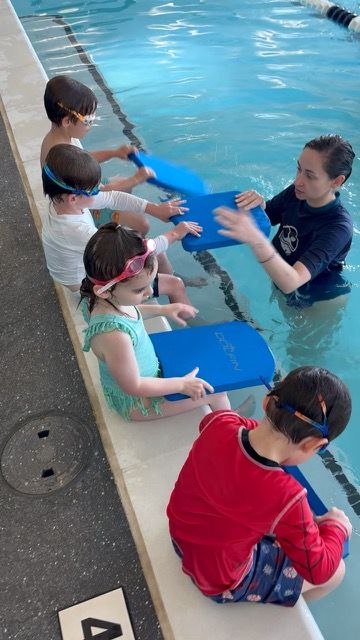
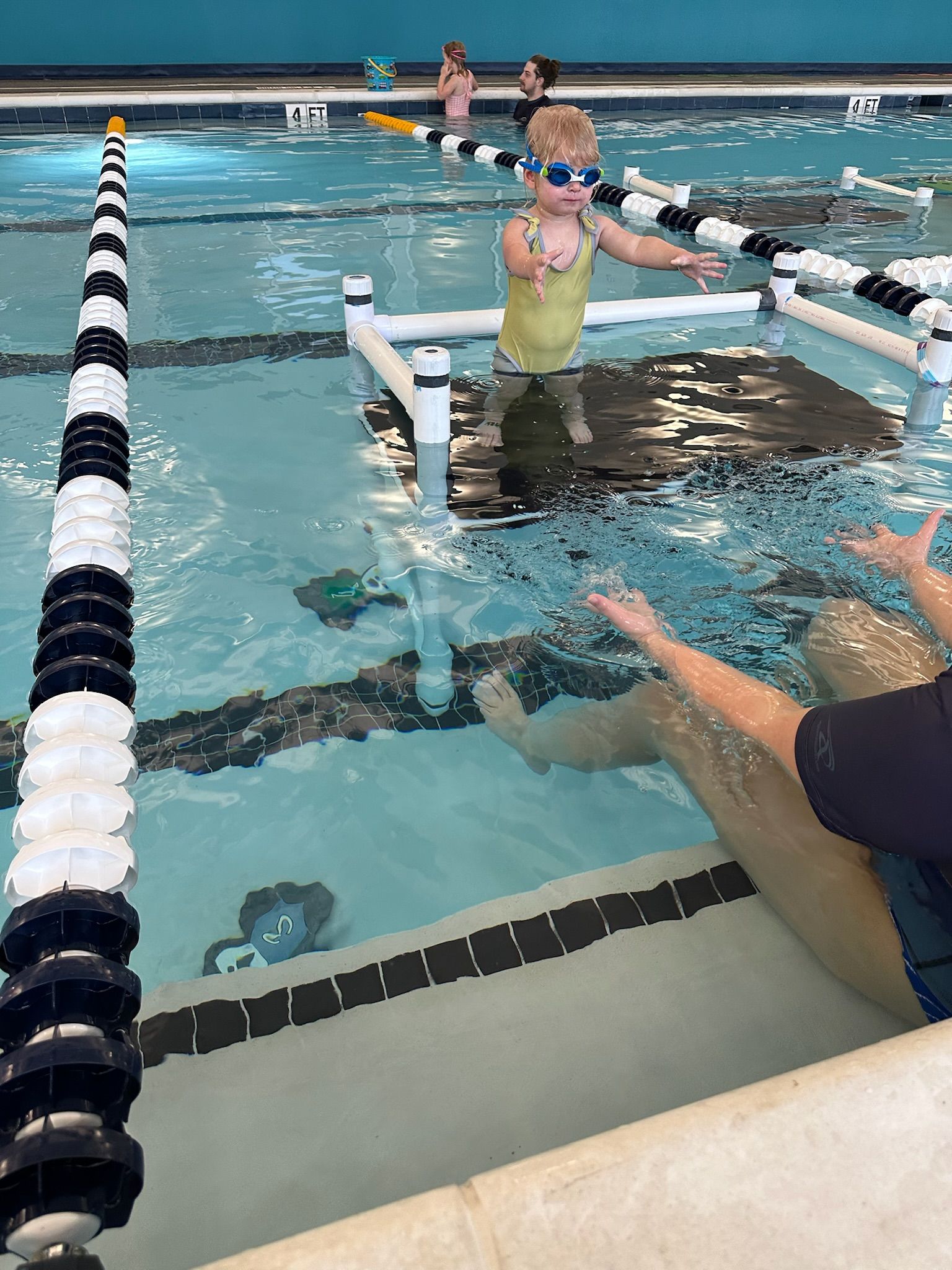
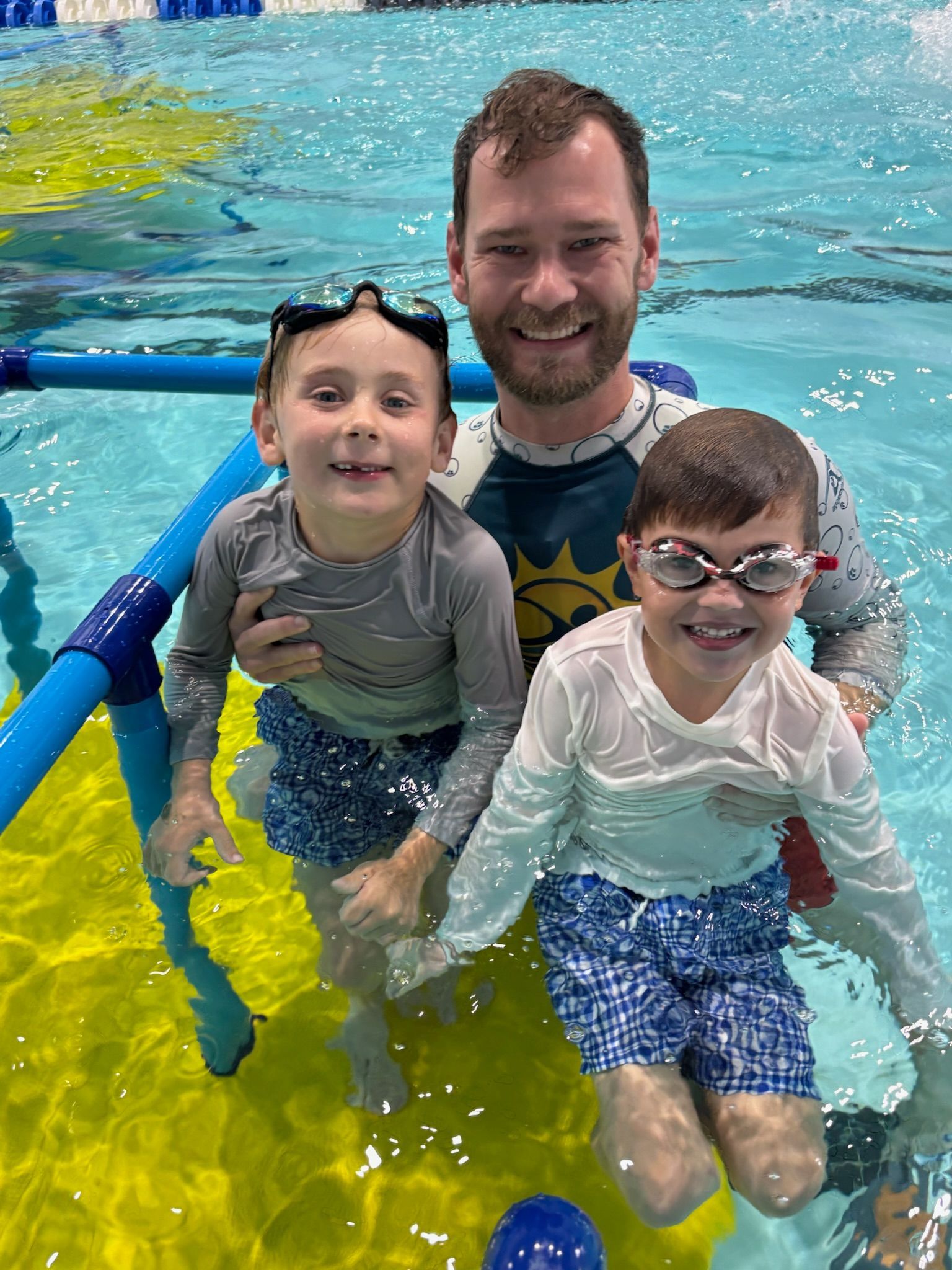
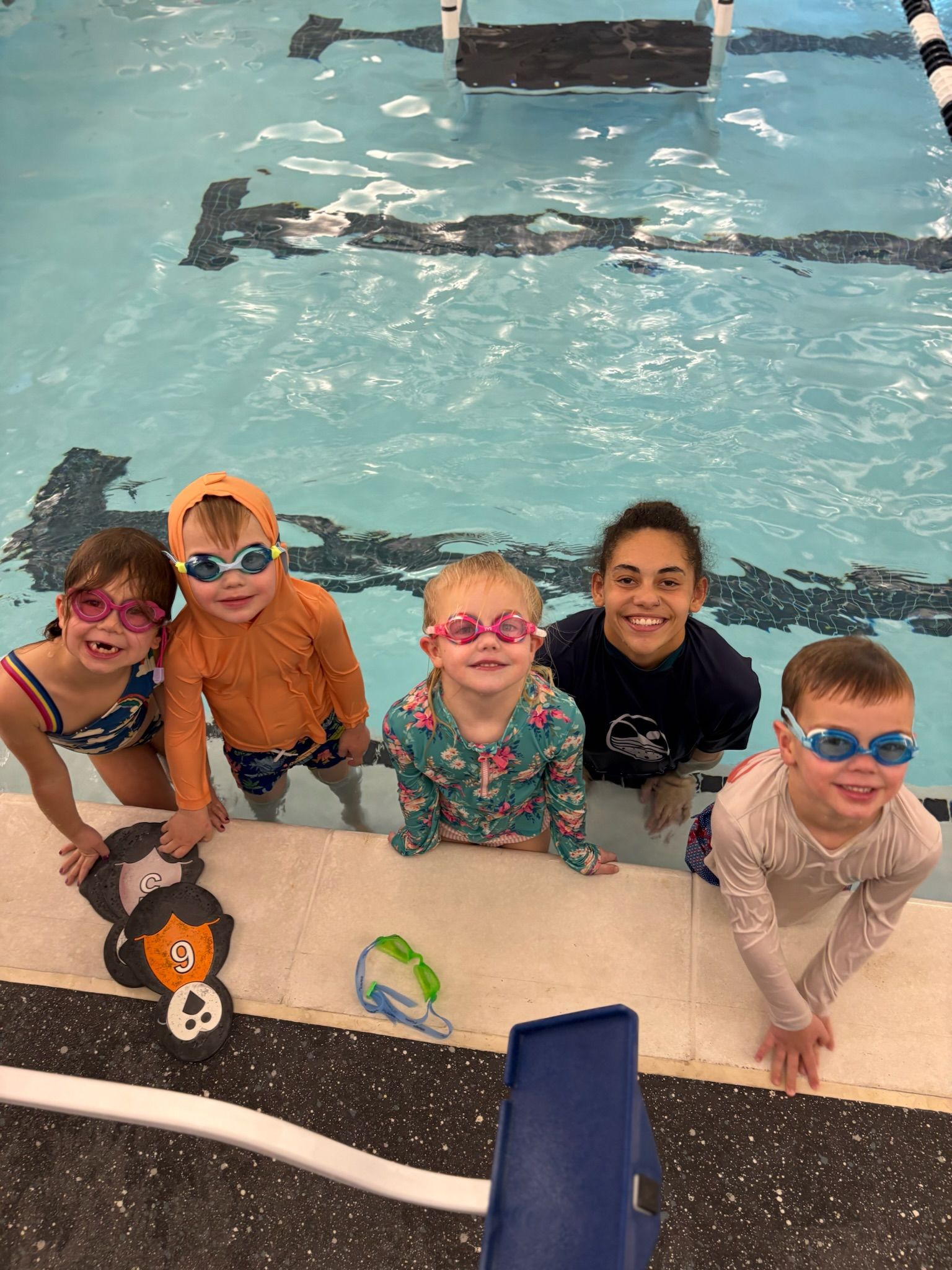
Our classes are kept small: two swimmers to one instructor in our Terrific 2s classes, three swimmers to one instructor in our 3s classes, and four swimmers in our 4-6 year old classes. By maintaining purposefully low instructor-to-student ratios throughout our program, every child receives the attention they need to progress at a pace that's appropriate for them.
Every Child Learns to Swim Differently
A key reason why it's impossible to predict exactly how long it takes to learn to swim is that no two children arrive with the same confidence level or developmental readiness. Some children enter the pool eager to learn and explore from day one, while others need a little more time to become comfortable in a new environment, away from a parent. Our instructors are trained to pick up on these cues and to adapt to different personalities and learning styles so that positive reinforcement, encouragement, and confidence-building underscore every lesson and every student’s journey.
Parents sometimes ask, "Does it take longer for older kids to learn how to swim?" Not necessarily. Older children may process instructions more quickly and have greater physical coordination, while younger children often adapt to the water more naturally simply because they've been introduced to it earlier. In the end, success depends far more on each child's individual developmental readiness than on age alone.
Why Consistency Is Vital When Learning to Swim
NSA swim lessons have an intentional 30 minutes of work built in with a flex five minutes for challenges for four years and older and productive play for kids three and younger—ample time to get kids warmed up and comfortable during each lesson. But to become confident swimmers, kids need to return week after week to practice, reinforce, and build upon what they've already learned.
Just like any other sport, swimming is a layered skill. During lessons, each child develops a healthy level of comfort in the water before moving on to foundational movements. This is followed by learning and developing safety skills, and finally by honing technique and building the endurance that will allow them to swim more efficiently. Each new skill builds on the one before, with consistent practice, which is why regular attendance, rather than summer-only lessons, ensures kids continue progressing without long gaps that can set them back.
This consistency gives children repeated opportunities to make good decisions in the water. Throughout our lessons, we gradually introduce new challenges in a controlled environment that encourage swimmers to think, react, and apply what they've already mastered. For example, once kids have reached the appropriate level in their lessons, classes end with them jumping in the water and finding the wall. This isn’t simply to provide a fun group activity. It’s to show kids that if they jump well beyond the wall, they’ll need to be able to swim back to safety. As their confidence develops, so too does their judgment and their ability to respond calmly and appropriately when faced with new situations.
So, What’s the Verdict on How Long It Takes?
Parents (understandably) want a simple answer to this question. The most accurate answer is that every child follows their own path. Some develop foundational skills quickly, while others need more time to build confidence before they're ready to tackle the next challenge. While we encourage kids to face new challenges head-on, we never rush them. Proficiency in swimming isn’t measured by how quickly a child progresses but rather by the confidence, judgment, and skills they develop and can rely on every time they enter the water.
If you're looking for
swim lessons in Nashville, TN that families trust to build those skills, Nashville Swim Academy offers a year-round program designed around each child's individual disposition and developmental needs. Whether you're searching for
kids’ swim classes in The Nations for a first-time swimmer or you’re helping an older child
learn-to-swim in a Nashville program, our experienced instructors are committed to helping every swimmer build confidence, skills, and a lifelong love of the water, one lesson at a time.
Share Article